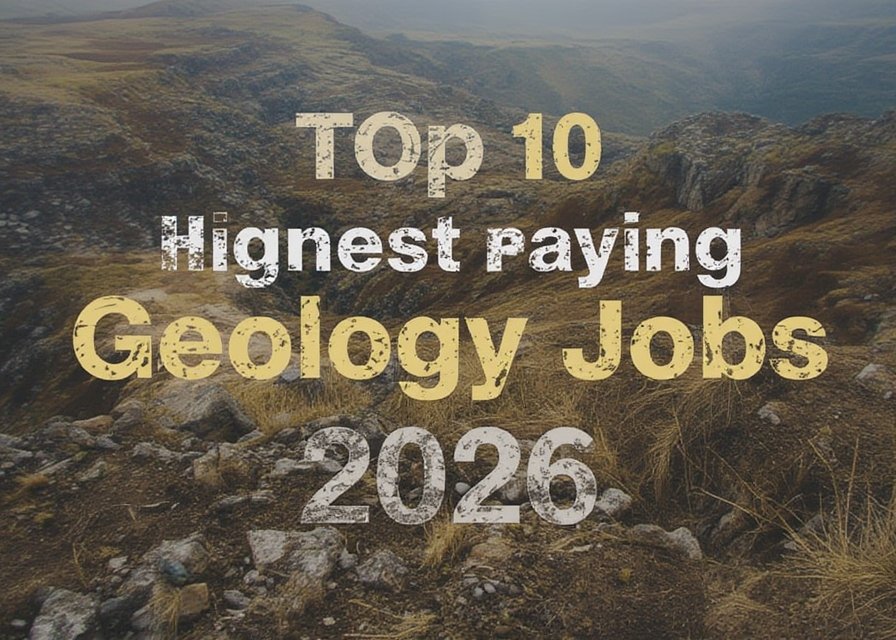
Top 10 Highest-paying Geology Jobs 2026 (Inc Salaries) – Nexford University
Geology jobs represent some of the most lucrative career paths in the geospatial industry, combining earth science expertise with advanced spatial analysis capabilities. As industries increasingly rely on geospatial technologies for resource exploration, environmental assessment, and infrastructure development, geology professionals with GIS skills command premium salaries. The integration of traditional geological knowledge with modern geospatial tools creates unique opportunities for high-paying positions that bridge field science and digital analysis.
Understanding the Technology
Geospatial technology in geology encompasses a range of tools and methodologies that enable professionals to analyze, visualize, and interpret geological data in spatial contexts. This includes Geographic Information Systems (GIS), remote sensing, spatial modeling, and 3D visualization tools that transform raw geological data into actionable insights. These technologies allow geologists to map mineral deposits, assess geological hazards, model subsurface structures, and monitor environmental changes across vast geographic areas with unprecedented accuracy and efficiency.
Applications in Google Earth Engine
Google Earth Engine provides powerful capabilities for geological analysis by offering access to extensive satellite imagery archives and computational resources. Geologists can leverage this platform for large-scale analysis of geological features, mineral exploration, and environmental monitoring.
- Mineral exploration: Analyzing multispectral imagery to identify mineral signatures and alteration patterns associated with ore deposits
- Geological hazard assessment: Processing time-series satellite data to monitor landslides, subsidence, and volcanic activity
- Environmental impact studies: Evaluating land cover changes and ecosystem health in mining or drilling regions
Benefits for GIS Professionals
For GIS professionals and remote sensing specialists, geology-focused geospatial applications offer compelling career advantages. The specialized knowledge of geological processes combined with spatial analysis skills creates high-value expertise that organizations are willing to compensate generously. These professionals can work on diverse projects ranging from petroleum exploration to renewable energy site selection, providing both intellectual stimulation and financial rewards. The ability to integrate field data with spatial analysis tools also enhances decision-making capabilities in resource management and environmental protection.
Conclusion
The convergence of geology and geospatial technology represents a dynamic career frontier with substantial earning potential. As industries continue to digitize their exploration and monitoring workflows, professionals who can bridge geological expertise with spatial analysis capabilities will remain in high demand. The future promises even greater integration of AI, machine learning, and real-time monitoring capabilities, further elevating the value of geospatial geology professionals in addressing global challenges related to resource management, environmental sustainability, and infrastructure development.
FAQ
What is Top 10 Highest-paying Geology Jobs 2026 (Inc Salaries) – Nexford University in geospatial technology?
This refers to a ranking of geology careers that offer the highest compensation, particularly those requiring geospatial technology skills. These positions typically combine traditional geological expertise with advanced GIS, remote sensing, and spatial analysis capabilities, commanding premium salaries due to their specialized nature and critical importance to industries like mining, petroleum, and environmental consulting.
How can Top 10 Highest-paying Geology Jobs 2026 (Inc Salaries) – Nexford University be used in Google Earth Engine?
Geology professionals in high-paying positions can use Google Earth Engine to conduct large-scale geological analyses, process satellite imagery for mineral exploration, monitor environmental impacts of extraction activities, and create comprehensive geological maps. The platform’s cloud-based processing capabilities enable analysis of terabytes of geospatial data that would be impractical with traditional desktop GIS software.
Why is it important for GIS professionals?
Understanding the intersection of high-paying geology careers and geospatial technology is crucial for GIS professionals because it reveals career pathways that combine technical skills with domain expertise. This knowledge helps professionals identify specialization opportunities, understand industry demands, and develop the specific skill sets that command premium compensation in the geospatial job market.
Source: Nexford University
https://www.nexford.edu